Mastering CVC Phonics Worksheets: A Designer's Guide to Educational Visuals
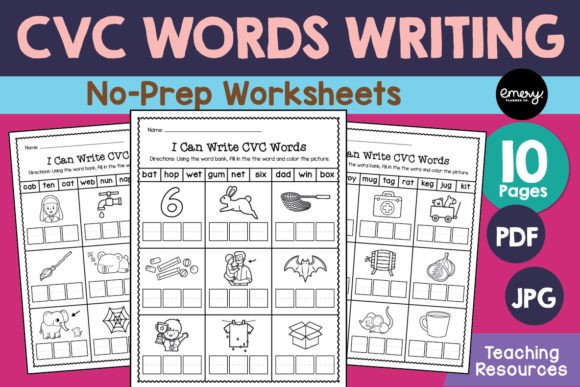
Effective educational design transcends mere aesthetics; it requires a deep understanding of pedagogy and visual hierarchy to create materials that truly engage and teach. When developing resources for early literacy, such as CVC Phonics Worksheets, a designer's role is to build a visual framework that supports learning objectives without distraction, blending clarity with creative appeal.
The Visual Anatomy of Effective Phonics Design
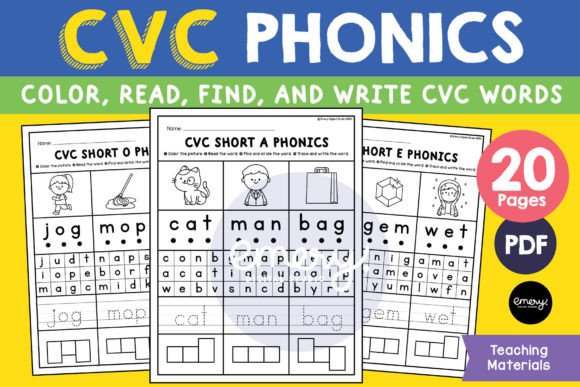
At its core, a CVC worksheet is a study in focused visual communication. The design must guide a young learner's eye seamlessly from the word to the corresponding image, often through a clean layout and intentional use of negative space. This isn't just about making a page look nice; it's about creating a visual hierarchy that reinforces the learning process. The choice of typography is paramount—letterforms must be clear, distinguishable, and appropriate for early readers, avoiding overly decorative fonts that could confuse a child learning to decode letter sounds.
Practical Applications in Branding and Content Creation
The principles used in designing these worksheets are directly transferable to broader graphic design and branding projects. Consider how the same clarity and user-centric approach can enhance:
- Brand Identity Systems: Creating consistent, easy-to-understand brand guidelines mirrors the need for consistency in educational materials.
- UI/UX Design: Designing intuitive interfaces for children's apps or educational platforms relies on the same principles of clear visual cues and progressive disclosure.
- Packaging Design: Developing packaging for educational toys or books requires a visual design that communicates purpose and age-appropriateness instantly.
- Marketing Collateral: Designing flyers or social media graphics for schools or tutoring services benefits from a clean, organized layout that communicates key information quickly.
Evaluating and Implementing Educational Design Assets
When selecting or creating assets like CVC Phonics Worksheets, a designer should evaluate them against several key criteria. Readability and scalability are non-negotiable; the design must function well both as a digital PDF on a tablet and a printed page in a classroom. The color palette should be deliberate—often, a black and white pack is strategically superior, reducing printing costs and minimizing visual clutter, allowing the content itself to take center stage.
Furthermore, the design must align with the audience expectations and design goals. For a kindergarten worksheet, the goal is engagement and foundational skill-building. This influences every choice, from the weight of the lines to the simplicity of the accompanying illustrations. The asset should feel cohesive and professional, contributing to a polished creative project whether it's part of a larger curriculum or a standalone resource.
Ultimately, the most impactful educational materials are those where thoughtful design choices are invisible, serving only to elevate the content. By applying principles of visual communication, modern aesthetics, and user-centered design workflow, creators can develop resources that are not only beautiful but fundamentally effective tools for learning and engagement.