Ancient Rome Watercolor Clipart: A Designer's Guide to Timeless Visuals
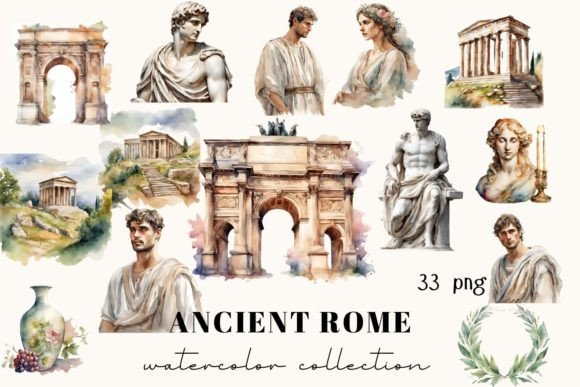
Imagine infusing your designs with the raw power and elegance of the Roman Empire, all through the delicate medium of watercolor. This unique blend of historical grandeur and artistic softness is precisely what makes Ancient Rome Watercolor Clipart a powerful and versatile asset for contemporary graphic design. It offers a bridge between past and present, providing a rich visual vocabulary for projects that demand both sophistication and a touch of classical inspiration.
Why This Collection Resonates in Modern Design
In a digital landscape saturated with flat graphics and sterile vector art, watercolor textures introduce organic warmth, authenticity, and emotional depth. A collection inspired by Ancient Rome adds a layer of cultural and historical weight. It’s not just about depicting columns and laurel wreaths; it's about evoking concepts of empire, philosophy, artistry, and enduring legacy. This makes it an exceptional tool for visual storytelling.
For designers and creators, the practical value is immense. The hand-painted aesthetic of these assets can instantly elevate a project, differentiating it from competitors using generic stock imagery. They are particularly effective for brands that wish to convey timelessness, authority, craftsmanship, or a connection to classical ideals—think luxury goods, educational platforms, high-end restaurants, or cultural institutions.
Practical Applications Across Creative Projects
The true strength of a well-curated clipart set lies in its adaptability. Here’s how you can leverage these Roman-inspired watercolor elements:
- Brand Identity & Logo Design: Use a single, impactful element like a watercolor Roman numeral or a fragment of a mosaic as a distinctive mark or brand asset. The texture adds a unique, artisanal quality that vector logos often lack.
- Marketing & Social Media Graphics: Create stunning hero images, Instagram carousels, or Pinterest pins. Layer watercolor gladiators or architectural elements over solid backgrounds to create visual hierarchy and stop-scrolling appeal.
- Editorial & Web Design: Enhance magazine layouts, blog headers, or website banners. These cliparts serve as excellent visual anchors or thematic backgrounds that support typography without overwhelming it, improving overall readability and user experience.
- Packaging & Print Design: For products like wines, gourmet foods, or books, this style can create shelf appeal. It suggests quality and a story, making the unboxing experience more memorable.
- Digital Products & Presentations: Design compelling eBook covers, course materials, or presentation slides that engage an audience. The visual style makes complex historical or educational content more accessible and visually cohesive.
Integrating Assets with Professional Finesse
To use such assets effectively, thoughtful integration is key. First, consider your color palette. The watercolors will have their own hues—ochres, terracotta, deep blues—so build your brand or project palette to complement them, ensuring visual harmony. Next, pay attention to visual hierarchy. A busy watercolor scene might work as a full-bleed background, while a simpler element could be a subtle accent beside a headline.
Always evaluate the scalability and resolution of the files. High-resolution PNGs with transparent backgrounds offer the most flexibility for layering in design software like Adobe Photoshop or Illustrator. Ensure the artistic style aligns with your audience's expectations; a playful, cartoonish Rome wouldn't suit a serious historical journal, but a detailed, painterly rendition would.
Complementing Typography and Composition
The choice of typography can make or break the design. Pair the organic watercolor imagery with clean, modern sans-serif fonts for striking contrast, or with elegant serif fonts for a fully classical aesthetic. The goal is balance—let the artwork breathe and support the text, not compete with it. Use the clipart to guide the viewer's eye and create a compelling composition that feels both dynamic and harmonious.
Ultimately, selecting high-quality creative assets like a dedicated watercolor collection is an investment in your project's visual language. It moves beyond mere decoration to become a core component of your storytelling and brand communication. By choosing assets that are both beautiful and contextually meaningful, you craft experiences that resonate deeply, leaving a lasting impression of quality and thoughtfulness on your audience.