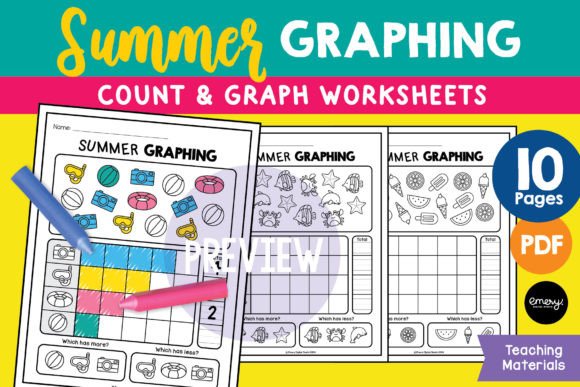
Summer Graphing, Count and Graph: Visual Data for Design
Capturing the essence of summer through visual data requires more than just bright colors; it demands a structured approach to information design that is both engaging and educational. The "Summer Graphing, Count and Graph" collection offers a specialized set of worksheets designed to introduce fundamental data handling concepts. For graphic designers and educators, this resource provides a practical framework for teaching visual communication, transforming simple counting exercises into an understanding of how to record, interpret, and present information effectively. This is a cornerstone of clear visual hierarchy and user experience.
The Foundation of Visual Data Handling
At its core, this collection is an introduction to data visualization. The ten black-and-white PDF worksheets guide young learners through the process of counting summer-themed items and representing those quantities on a graph. This practice is directly analogous to creating charts, infographics, and dashboards in professional design. It builds a foundational skill set in visual design—the ability to translate raw data into a format that is quickly understood and aesthetically coherent. The monochromatic design ensures the focus remains on structure and form, a valuable lesson in editorial design and print design where color can sometimes complicate clarity.
Practical Applications Across Creative Projects
The principles embedded in these worksheets have broad applications for designers, marketers, and creators. Understanding how to count, categorize, and graph is essential for numerous projects.
- Brand Identity & Marketing: Creating infographics for reports, presentations, or social media graphics that need to convey survey results or performance metrics clearly.
- Web & UI Design: Designing intuitive dashboards, progress trackers, or data displays within applications where user understanding is critical for UX design.
- Packaging & Merchandise: Organizing information on labels or product sheets, ensuring key details are presented with a clear visual hierarchy.
- Advertising & Editorial Layouts: Building compelling charts for magazine articles, blog posts, or digital ads that support a narrative with factual, visual data.
Integrating Structured Graphics into Your Workflow
When selecting or creating assets like these graphing worksheets, consistency and scalability are paramount. A well-designed graphing template should function within a larger brand identity system. Consider how the lines, axes, and labels align with your chosen typography and overall color palette. The clean, scalable vector-like nature of a well-structured graph ensures it remains sharp in both digital and print design applications. For a professional presentation, this attention to detail in data visualization separates amateur work from polished, credible communication.
Tips for Effective Data Visualization
- Clarity Over Decoration: Prioritize readability. Every line and label should serve a purpose in helping the viewer interpret the information.
- Maintain Consistency: Use the same style of graph, line weight, and iconography throughout a project to create a cohesive visual design language.
- Know Your Audience: The complexity of the graph should match the user's expectations and knowledge level, a key tenet of effective UX design.
- Test for Scalability: Ensure your graphing elements are legible when scaled down for a mobile screen or enlarged for a presentation slide.
Thoughtful design choices in data handling do more than organize numbers; they build trust and enhance communication. Quality creative assets, whether for educational purposes or professional branding